Monday, November 16, 2020

University of California v. Bakke

The case of University of California v. Bakke was a Supreme Court case over the dispute of Allan Bakke believing that he was denied admission to the University of California due to the color of his skin. Bakke was a white man and had better testing scores and grades than some of the African American students that were admitted.

The first argument that came up in the case was the issue of Bakke's age. Bakke was 35 years old when he applied to the university. The side of the university argued that if there was any discrimination that took place in the administration process, then it would've been one based on age. The side of Bakke would argue that age shouldn't be considered because he was only older than the other applicants because he served in the military before hand.

One of the other arguments that the University brought up was the fact that this wasn't a case exclusive to the University of California. Multiple other schools had also denied Allan Bakke of admission. This showed that it most likely was not a result of race that Bakke wasn't getting admitted to theses universities.

Lastly, The University argued that it was due to the other applicants being more well rounded and that although Bakke may have had higher test scores, the other applicants had better applications because they volunteered, played sports, participated in extra curricular activities, etc. This meant that Bakke wasn't denied because of his skin color, he was denied because he was too much of a one dimensional student. 

The decision made by the Supreme Court ruled that it was unconstitutional for a University to have racial quotas for admission to their school. However, a school using affirmative action to accept minorities was constitutional.

Bloody Sunday

 On the morning of March 7th, 1965, The marches from Selma to Montgomery Alabama. This was a peaceful protest to attempt to gain attention for voter rights for African Americans. However, on the day of March 7th when the marchers crossed the county line they were met with an onslaught of officers and state troopers. These members of law enforcement attacked the marchers with clubs, tear gas and even unleashed dogs on the unarmed protesters.

The unarmed marchers never fought back. Many were beaten within inches of their lives and they never fought back. They eventually just turned around and walked back to Selma. The protesters had shown who they were and the state troopers had shown who they truly were. 

Luckily, for the marchers, the entire assault was captured on video. Within days, the footage was given to news stations and broadcasted for the entire country to see. American citizens were appalled at what they were seeing and felt sympathy for the unarmed protesters. The marchers had gained the support of the country and would see the benefits of that soon.

The uproar of support for the marchers from people around the entire country lit a fire under the Alabama government and U.S congress. Not long after, on August 6th, 1965, Congress passed the Voting Rights Act. This act prohibited racial discrimination in voting. The marchers had won in the end.

https://snccdigital.org/events/bloody-sunday/ 

https://www.history.com/news/selma-bloody-sunday-attack-civil-rights-movement 

Monday, November 9, 2020

Influential Events in African American History

 There have been many important moments throughout the mid 1900s that influenced African American culture and have become a key part of American history.

First, The Congress of Racial Equality. This was founded in 1942, this group aimed at desegregating public schools. Their goal would eventually be completed as a result of Brown v. The Board of Education. A group similar to this one came about in the NAACP. The NAACP was the National Association for the Advancement of Colored People. Their goal was to eliminate race based discrimination. For the most part their goal was completed. 

The Jazz age was also very influential in the shaping of a culture for black people. Jazz music originated in African American communities in New Orleans, Louisiana. This became a staple of the 1920s and brought blacks and whites together. Notable early black celebrities arose during this time in Louis Armstrong and Duke Ellington. Lastly, The Harlem Renaissance was arguably the most influential movement for African American culture. The Harlem Renaissance began with the great migration which was the movement of black people in America from southern rural areas to northern urban areas. This led to a large population of blacks in cities and allowed them to form their own small communities. Within these communities, specifically in New York, there was an uproar of new literature and music styles made by African Americans. This was where many people site as the origin of African American culture.

Law Behind Brown V. Board

 Brown vs the Board of Education was a major Supreme Court case that took place in 1954. The Brown family was arguing for the desegregation of schools because it implied that blacks were inherently inferior to whites. The Board of Education was arguing on the basis of separate but equal. 

There is no good reason for children to be separated strictly because of the color of their skin in our country today. It should not acceptable for the idea that there is an “inferior” or “superior” race, to be a common thought in United States’ citizens' minds. 

In the case of Plessy V. Ferguson in 1896, There was a monumental decision made that resulted in the segregation of public facilities and a doctrine known as “Separate but Equal”. With that doctrine being said. Can two separate facilities really be equal? And why do they have to be kept separate? How could the relationship between blacks and whites ever improve unless we are forced to interact and get to know each other? As we've seen the rift between blacks and whites has shrunk dramatically since 1954.

The other problem that arose with the decision of Plessy V. Ferguson, is that if the races are to be separated, then there is always going to be a race that is treated as the inferior. Sadly in this case the African American race has been treated as the inferior race for over a century. This can only be stopped with the integration of the two races and blur the lines so that instead of being seen as black or white, they are seen as Americans. 

The decision of this case destroyed the idea of separate but equal and resulted in the desegregation of public schools in the United States. This was a major event in the civil rights movement and pushed our country closer towards the one we know today.


https://www.history.com/topics/black-history/brown-v-board-of-education-of-topeka 

https://www.uscourts.gov/educational-resources/educational-activities/history-brown-v-board-education-re-enactment


Wednesday, October 14, 2020

The Underground Railroad, Bleeding Kansas and the Election of Honest Abe

There were many events or movements that led up to the tipping point that was the Civil War in the United States. A few of the major topics are the underground railroad, bleeding Kansas and the election of 1860. Both of these things had major repercussions after they took place. These events have direct ties to the secession of the southern states and the start of the Civil War.

The Underground railroad was a network of secret routes and safe houses that ensured a safe pathway for escaped slaves to travel to the north. Once the escaped slaves got to the north they were then "safe" because technically they were now free in these states because slavery was outlawed. However, this is what caused the popularization of bounty hunting. Slave owners would put out a reward for whoever could find their escaped slaves and return them. This led to bounty hunters going into the north and kidnapping any one who was black, whether they were escaped slaves or not. This pitted the North and South against each other. 

Bleeding Kansas took place throughout 1854-1861. This was a series of violent confrontations revolving around the discussion of the legality of slavery. Kansas and Missouri were border states which meant that they were in the front lines of confrontation between the north and south. This led to people coming in from surrounding states, north and south to vote on state government issues to attempt to sway the state either pro or anti slavery.

Finally, the election of 1860 was the final tipping point that led to the secession of the southern states and start of the civil war. The election of 1860 was the election that saw Abraham Lincoln chosen as the president of the United States. Lincoln was very vocal during his campaign about his anti slavery views, as he was from the north. This angered Americans living in the southern states as they saw it as a threat to their livelihood. Lincoln was eventually elected and this resulted in South Carolina seceding from the United States in 1861 and ten other southern states later following their lead. 

Monday, October 12, 2020

The Laws Behind State V. Mann

The North Carolina court case of State V. Mann is an interesting one. John Mann, a slave owner, was charged with battery and assault on a slave named Lydia who was being loaned to Mann by Elizabeth Jones. The state fined Mann five dollars. Mann appealed the fine under the grounds that he had done nothing wrong. 

Legally considered property, slaves were not allowed to own property of their own. They were not allowed to assemble without the presence of a white person. Slaves that lived off the plantation were subject to special curfews. In the courts, a slave accused of any crime against a white person was doomed. In October 1705, Virginia passed a law stating that if a master happened to kill a slave who was undergoing “correction,” it was not a crime. Furthermore, the legislation said, when slaves were declared runaways, it was “lawful for any person to kill and destroy by such ways and means as he shall think fit.” When it comes down to it, slaves were considered property at this time and you can not be charged for assault on a piece of property.

The court ruled in favor of Mann and he was payed back the five dollar fine. While this decision is obviously morally wrong, the court has to make decisions based on laws and facts and the facts were that Mann hadn't broken any precedented laws. The ruling stated that slave owners had absolute authority over their slaves and could not be found guilty of committing violence against them.


John Brown and His Relationship with Slavery

 John Brown was born on May 9th, 1800. His relationship with slavery was a very interesting one. John Brown was a white man, but he grew up poor so as a result his family did not have slaves but he did witness the negatives of slavery as a young kid. Brown hated what he witnessed as a kid. He hated it so much that he dedicated a large portion of his time to helping free slaves whatever ways he could.

John Brown worked with the Underground Railroad, helping runaway slaves hide from bounty hunters and their masters by hiding them. He also opposed many laws and peacefully petitioned government to make his voice heard and help the enslaved community.

Sadly, John Brown decided that fighting peacefully would never work. In 1856 Brown led his five sons to Kansas where they slaughtered five pro slavery men. Three years later, on October 16th, 1859, John Brown would lead twenty men with the intent of starting a slave rebellion. He was unsuccessful and was arrested and executed by Robert E. Lee.

Monday, September 14, 2020

Thomas Jefferson and His Relationship with Slavery

Thomas Jefferson - Quotes, Slaves & Presidency - Biography

Thomas Jefferson had an illustrious career in the U.S government throughout his life. Jefferson was born on April 13th, 1734 in Central Virginia. This is the moment when Jefferson's complicated relationship with slavery began, as he was born on his fathers plantation. Jefferson got to see the negatives of slavery first hand and was able to build sympathy for his fathers slaves. As a result of Jefferson being raised on a plantation, Jefferson never knew any other way of life until he was able to travel when he got older. All throughout Jefferson's formative years he was surrounded by slavery, it was all he knew. This is what I believe is the main reason that Jefferson took so long to take a stand on his beliefs about slavery and eventually freeing his slaves when he died. 

Jefferson was consistently against slavery throughout his political career calling it "moral depravity" and a "hideous blot" on the United States. This shows that although Jefferson was sadly not brave enough or strong enough to take a stand. In Jefferson's later years he finally proposed a national plan to end slavery. This plan entailed the federal government buying all slave children for $12.50, raise them as freemen and train them for careers as freemen. This motion was denied but it goes to show Jefferson's true beliefs and shows the guilt he felt about not standing up for slaves in the past when he had more leverage.

Thomas Jefferson in most people's minds directly coincides with the constitution as he was the one who wrote it. This also means Jefferson goes hand in hand with the phrase "All men are created equal." It doesn't get more simple than that. Jefferson believed that slavery was morally wrong and that African Americans were equal to White Americans. I believe that it is pretty clear to see, that throughout Jefferson's political career and even his life in general he was very anti-slavery, as he even made a family with a slave, having four children after his wife passed away and said on multiple occasions that slavery was simply not right. But because of Jefferson's unwillingness to voice his true opinions on slavery, he is then often seen as just another racist president who owned slaves.

https://www.monticello.org/thomas-jefferson/jefferson-slavery/jefferson-s-attitudes-toward-slavery/  

https://www.umbc.edu/che/tahlessons/pdf/historylabs/Where_Did_Thomas_Jefferson_Stand_on_the_Issue_of_Slavery.PrinterFriendly.pdf


Wednesday, September 9, 2020

The Bible and Slavery throughout History:

Throughout the centuries there has been a fight against slavery. There were always people for it and against it. Most people would try to use their religion to justify their actions on whether or not they should condone or condemn slavery. They would use religious excerpts from religious books like the Bible to try and condone slavery but then others would pull other excerpts and letters written by religious leaders to condemn slavery.
5 Books That Are Not Included in the Bible | 5 Books That Were Removed From  the Bible | 5 Apocryphal Books You Should Read - Beliefnet

For the longest time people would try to say that slavery was justified in the Bible because of different epistles including; Ephesians 6:5, Colossians 3:22, and 1 Peter 2:18. Even though when looking at these epistles at a glance on paper and seeing them as if they support slavery, when taking them into consideration and breaking down the meaning of these epistles we see that they are against the slavery that we have come to know today. Many people will take verses out of the Bible and just use them to justify their actions but you have to look at the Bible as a whole because it is a progressive revelation. This is important because it goes to show that even though some parts of the Bible may say somethings we must remember to use the Bible as a whole to get an actual interpretation. Also, majority believe that the Catholic Church has only recently condemned slavery but in fact the Church had made many claims and letters condemning slavery dating back to 1435.


One of these letters includes a letter from Pope Eugene IV in which he states, “Therefore We ... exhort, through the sprinkling of the Blood of Jesus Christ shed for their sins, one and all, temporal princes, lords, captains, armed men, barons, soldiers, nobles, communities and all others of every kind among the Christian faithful of whatever state, grade or condition, that they themselves desist from the aforementioned deeds, cause those subject to them to desist from them, and restrain them rigorously.” What the Pope is saying here is that the Catholic Church is against slavery and exhort that everyone desist from it entirely. Also the Pope states that “These people are to be totally and perpetually free and are to be let go without the exaction or reception of any money”. This goes to show that not only did they condemn slavery but the insisted that all slaves shall be freed without any exception or compensation. An important part of this letter is the date that it was written. Although many believe the Catholic Church did not condemn slavery until the late 18 hundreds, they actually were against it way back in 1435. This goes to show that the Catholic Church was against slavery and the slave trade 60 years before Europeans would even discover the New World, where slavery became a prominent part of American history. So when people try to use verses form the Bible to justify slavery and try to say that the Catholic Church didn’t condemn slavery until the late eighteen hundreds we can see that this is not true, and in fact the Church was against slavery and the slave trade way before slavery became a prominent part of history.

This is a political cartoon on slavery | Realistic drawings, Slavery, Political  cartoons


A vast majority of religious believers today do not condone or support slavery. However, There was a time when certain religious texts such as the bible, were being written that slavery was normalized and a part of everyday life. There are multiple examples in the bible where slavery is both mentioned and condoned. Although this does not mean that the religions revolve around slavery; it does give people a good idea of what the feelings about slavery were during the times these religious books were scribed. For example in the Bible, Paul states “Slaves, be obedient to your human masters with fear and trembling, in sincerity of heart, as to Christ”. In this specific passage Paul is speaking to a runaway slave and convincing him to return to his master and obey him like he would Jesus. This quote shows paul, who in the bible is an apostle and a strong believer and teacher of Christianity not only condoning slavery, but also going out of his way to make sure it continues.


Another very similar example of this is in Colossians 3:22-24. This passage says “Slaves, obey your earthly masters in everything; and do it, not only when their eye is on you and to curry their favor, but with sincerity of heart and reverence for the Lord”. This portion is essentially saying that if slaves do not follow whatever their masters say to do, then they are not living their lives for the lord. Lastly, there is one more example in Peter 2:18. In this passage Saint Peter writes “Slaves, be subject to your masters with all reverence, not only to those who are good and equitable but also those who are perverse”. This evidence states that basically if you are a slave and believe in Jesus Christ then you should obey your master even if they’re a terrible person. Times have changed drastically since the time the bible was written as slavery sadly was a very everyday kind of thing during biblical times. However, These passages and a few others throughout the bible seem to unintentionally condone slavery. 


There are many instances throughout history where Christianity and slavery cross paths. Whether the religion is condemning or condoning the action; it is impossible to ignore their intertwined past.


References:

https://www.ewtn.com/catholicism/library/popes-and-slavery-setting-the-record-straight-1119 

https://www.thegospelcoalition.org/article/why-wrong-say-bible-pro-slavery/

https://www.biblegateway.com/passage/?search=Colossians%203:22-24&version=NIV 

https://time.com/5171819/christianity-slavery-book-excerpt/


Friday, August 28, 2020

Supreme Court

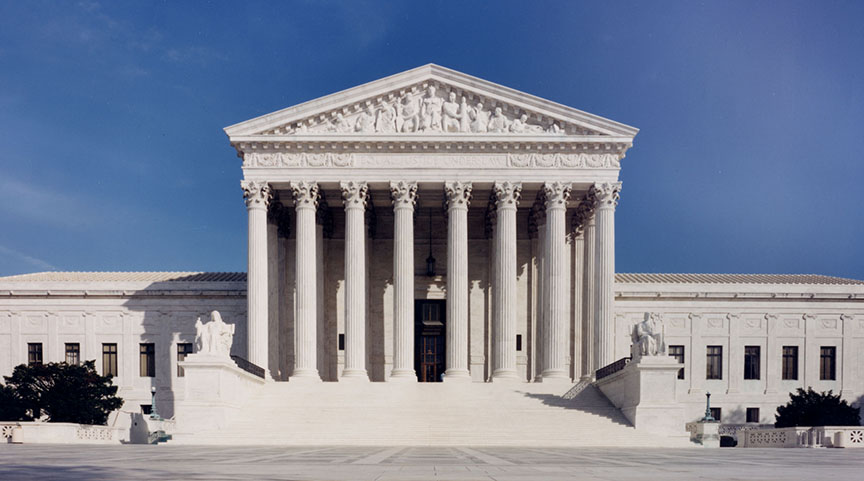
The Supreme Court Building - Supreme Court of the United States


When it comes to the justice system in America, the Supreme Court is at the top of the food chain. Every year the Supreme Court receives thousands and thousands of petitions that they must sort through and find cases that they feel are deserving of a second look. This job falls into the wheelhouse of nine very prestigious people: the supreme court judges. All judges are appointed by the president after spending years studying law and proving that they are worthy of that title. 

Often throughout the video the judges seem at odds and have different views on what exactly the supreme court is like and what it stands for. As a result of the supreme court often giving second looks to crimes with major punishment and prison sentences, I believe this makes the job of the nine judges one of the most important on Earth. The judges have to put forth significant effort to come to a decision on a case. This is because of how different their views are from each others especially with how polarized the left and right sides of politics are today.

Without carefully picked judges in place throughout the history of this country, the justice system in the United States very well may have collapsed. From chief justice John Marshall in the early 1800s up until today; the Supreme Court has helped to keep this nation afloat. 

https://www.youtube.com/watch?v=cWRoXYRsaeo 

University of California v. Bakke

The case of University of California v. Bakke was a Supreme Court case over the dispute of Allan Bakke believing that he was denied admissio...